|
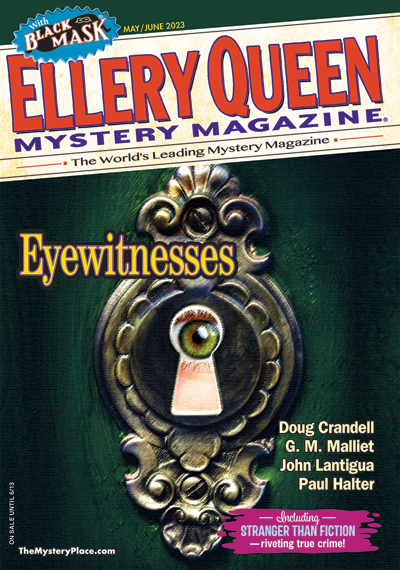
Four stories in this collection are currently nominated for a Dagger Award for Best Short Story from the Crime Writers Association, UK.
My short story in this collection is "Fear of Missing Out." "One of the most riveting stories in the collection" ~ KRISTOPHER ZGORSKI Link to purchase My story, "Pride of Cucamonga," appears in the Grateful Dead anthology Friend of the Devil edited by Josh Pachter. Publication date: September 2024.
UPDATE May 2025: Friend of the Devil is nominated for a 2025 Anthony Award for Best Anthology. In honor of Peter Lovesey (was ever a man better named?) I'm reprinting here my contribution to Sister in Crime's collection of some years ago, PROMOPHOBIA, edited by Diane Vallere - an essential writers' book that is still in print.
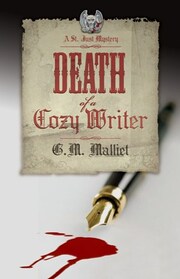
I've bolded my letter to Peter. It's a template to use if you're looking for an endorsement for your own book, and exemplifies what I best remember him for - his kindness to an author who was just starting out. Endorsements, or Getting to Yes By G.M. Malliet Most writers will tell you that seeking an endorsement or “blurb” from a fellow author is harder than writing the book itself. The truth is, the success or failure of a book—any book—can depend on obtaining honest endorsements to put on the cover. This is second only to reviews in helping to guarantee a successful book launch. So why is it many authors either fail to seek endorsements or seek them in all the wrong ways and places? I will use my own experience here, since I’ve looked at blurbs from both now: the debut author seeking blurbs and the “blurbee”—the author of eleven books now frequently approached for endorsements. First, let’s talk about common misconceptions made by authors new to the world of blurbs: Misconception: I am traditionally published, therefore my editor will take care of approaching other authors and editors for blurbs. Reality: No. This almost never happens. Editors are busy editing, and most don’t see this as part of their job description. Besides, you are not their only writer. You are only one in a stable. Misconception: The publicist at my publishing house will take care of this. It’s a publicist’s job. Reality: No. If it is anyone’s job, it is yours. Even if technically or theoretically it might be part of your editor’s job—see comment above. The marketing department will seek an endorsement for you if it fits in with their marketing plan for all their authors, but you are seldom going to be privy to that plan. Misconception: I’ve written a spy thriller filled with beheadings and foul language, but I would bet that nice cozy writer I recently met at a conference will be willing to blurb my book, anyway. Reality: No. No matter how winning your personality or how close you perceive your tie to be to the potential endorser, all you are doing is putting him or her on the spot with your request and testing your supposed friendship. Also, realize that an endorsement from someone working outside your genre is worthless. Worse, it can backfire. Even if you can convince this person to write an endorsement for your book, your potential reader won’t understand what sort of book you’ve written. A cozy thriller? A thrilling book about a knitting circle? Remember that your potential readers will devote approximately five nanoseconds to deciding whether or not to buy your book before they move on to the next great thing. The endorsement has to make perfect sense. If the first rule of obtaining an endorsement is, “Never mislead the reader,” the second rule has to be, “Don’t confuse the reader.” So, how do you win the cooperation of an established writer in giving you an endorsement? First, summarize your book in two or three sentences—no more. Then make up a short list of about ten authors who are writing books similar to yours (their emails should be available somewhere on their websites). Better yet, these should be authors you admire who have inspired your own writing. It doesn’t matter if this list is, to your mind, completely outrageously optimistic. If you have written a good book and you have a little background to show for yourself (awards or writing credits), you may be surprised by the yeses you get. Authors like to help other authors—particularly debut authors. They know how much they owe the Universe for their own careers, and if you give them a chance to pay it forward, they generally will love doing so. If you are polite. If your book is in their genre. If they have the time. You must be prepared for the eventuality that your email may hit them at the wrong time in their own busy careers. But, nothing ventured…. Moving on to the email that you (not your editor, your agent, your publicist, or your marketing person) will write. It is essential that you compose a letter targeted specifically to each author on your list. This is not a one-size-fits-all operation. This will take time. When I sought endorsements for my own first book, it took me about three weeks to compose the letters. (And my hands were shaking each time I hit the “send” button.) They had to be honest, they had to be based on what I actually knew of the writer’s work, and they had to be polite and engaging. They were probably the toughest writing I’ve ever done. If you don’t your “target” authors, and particular facets of their writing, then why are you wasting their time with your query? Bottom line: If you care about your writing career, blurbs are down to you. Below is the email I wrote to the outstanding and generous Peter Lovesey, years ago. Subject: request for Peter Lovesey Mr. Lovesey - First, congratulations on your upcoming Lifetime Achievement Award at Malice Domestic. It is so well-deserved. I look forward to being in the audience to cheer you on. In July, I will at last become a published mystery author when my first book, which won the Malice Domestic grant, comes out. My only other fiction credits are for short stories in Chesapeake Crimes II and now III. I am writing to ask if you would honor me by being willing to read the book with a view to writing a short blurb for it. The book (Death of a Cozy Writer) is published by Llewellyn/Midnight Ink. First in a series, it is, somewhat like the Bertie books, an homage to (and a bit of a send-up of) the mysteries of the Golden Age. More information appears at https://GMMalliet.com. I know you must be inundated with requests like this. I would not be so bold as to ask if you had not had such an influence on my writing career. If you are willing, just let me know what you need and I'll get it to you quickly in whatever form is most agreeable to you. Sincerest thanks and well wishes, G.M. Malliet It's here! Download the PDF for the full schedule.
https://www.malicedomestic.net/_files/ugd/a43e5b_1ec5e5a6d0f34a69ba17e62a5d181bde.pdf My events are all on Saturday April 26. I'll be signing books at 11 AM Saturday. Break for lunch and then at 1 PM Saturday I have the honor of interviewing guest of honor Marcia Talley. 1:00 pm – 1:50 pm It’s an Honor: Guest of Honor Interview Ballroom D Marcia Talley interviewed by G.M. Malliet At 2 PM immediately after the interview with Marcia, I am on a panel called Marple & Poirot: Agatha Christie’s Impact on Today’s Writers - which is just my cup of tea. Ballroom A Moderator: Art Taylor Connie Berry Barbara Barrett Sharon Lynn GM Malliet https://www.malicedomestic.net/_files/ugd/a43e5b_1ec5e5a6d0f34a69ba17e62a5d181bde.pdf In the pantheon of Golden Age detective fiction, few names shine as brightly as Agatha Christie. Yet for devoted mystery readers, another name deserves equal recognition: Ngaio Marsh. Despite producing some of the finest detective novels of the 20th century, the New Zealand-born author remains somewhat overshadowed by Christie's immense legacy.
Dame Ngaio Marsh (1895-1982) crafted 32 detective novels featuring her aristocratic Scotland Yard inspector, Roderick Alleyn. Beginning with "A Man Lay Dead" in 1934 and concluding with "Light Thickens" in 1982, Marsh maintained a remarkable consistency over nearly five decades of writing. Unlike many of her contemporaries, Marsh led a dual creative life. While Christie dedicated herself primarily to writing, Marsh divided her time between detective fiction and theater, becoming a respected director and producer in New Zealand particularly known for her Shakespearean productions. This theatrical background infused her mysteries with rich settings and characters. Many of her most memorable works, including "Vintage Murder," "Enter a Murderer," and "Light Thickens," feature theatrical backdrops. Her insider knowledge of stage dynamics allowed her to create tension and drama that felt authentic and compelling. The theatrical elements also gave her mysteries a distinctive flair that set them apart from her contemporaries. Marsh's writing often demonstrated greater literary sophistication than Christie's more straightforward approach. Her prose was elegant, her dialogue witty, and her character development nuanced. Inspector Alleyn himself evolved from a somewhat stereotypical aristocratic detective in the early novels into a complex, fully realized character in later works, particularly after his marriage to painter Agatha Troy. Critics have long praised Marsh's technical excellence. Her plots were meticulously constructed, her clues fairly presented, and her solutions satisfyingly logical. P.D. James once noted that Marsh wrote "better-constructed plots than Christie and better-drawn characters than Sayers." Despite these strengths, several factors have contributed to Marsh's relative obscurity compared to Christie. Christie produced 66 detective novels to Marsh's 32, maintaining a more consistent publishing schedule. Christie's publishers also invested heavily in promoting her as the "Queen of Crime," helping to cement her position in the public consciousness. While Christie's direct, clean prose appeals to a broad audience, Marsh's more literary style and theatrical settings can feel less accessible to casual readers seeking a straightforward puzzle. The adaptation factor cannot be overlooked. Christie's works have been adapted countless times for film and television, introducing new generations to her stories and characters. Marsh's novels, while occasionally adapted (most notably for the BBC's "Inspector Alleyn Mysteries" series), never achieved the same cultural penetration. Being based primarily in New Zealand also placed Marsh at a geographical disadvantage in the London-centered publishing world of her era, limiting her promotional opportunities and media exposure. For readers willing to venture beyond Christie, Marsh offers rich rewards. Her mysteries combine the best elements of the Golden Age—ingenious puzzles and satisfying resolutions—with literary flourishes and psychological insights that often surpass her more famous contemporary. Her theatrical knowledge gives her work a unique dimension, with vivid sensory details and dramatic tension that pull readers into the story. The relative neglect of Marsh's work represents one of the great oversights in detective fiction. Those who discover her typically find themselves wondering why her name isn't mentioned in the same breath as Christie, Dorothy L. Sayers, and other luminaries of the genre. In a literary landscape that regularly rediscovers overlooked talents, perhaps it's time for Ngaio Marsh to step out of Christie's shadow and take her rightful place in the spotlight. Her body of work stands as a testament to her remarkable skill and deserves to be celebrated alongside the very best of mystery fiction. Josephine Tey’s "The Daughter of Time" stands as a landmark in crime fiction, and a closer look at its author reveals how her singular approach shaped this timeless work. Tey, a pseudonym for Elizabeth MacKintosh, brought a unique perspective to the genre that set her apart from her contemporaries. A reclusive Scottish writer with a keen interest in history, Tey combined meticulous research with an innovative storytelling method, culminating in a novel that is as much a historical investigation as it is a mystery. Born in 1896, Elizabeth MacKintosh lived a life that, while outwardly quiet, was steeped in creativity. A former teacher turned full-time writer, she first achieved success as a playwright under the name Gordon Daviot before turning to crime fiction in the 1930s. As Josephine Tey, she created a number of celebrated detective novels featuring Inspector Alan Grant, yet she never sought the public spotlight. Instead, Tey remained a highly private figure, preferring to let her work speak for itself. This choice to remain out of the public eye perhaps allowed her the freedom to experiment, and experiment she did. When "The Daughter of Time" appeared in 1951, it startled and delighted readers by defying conventions of detective fiction. Tey, in essence, turned the genre inside out. Instead of presenting a conventional murder scene, a string of suspects, and a hunt for clues, she locked her detective in a hospital room and asked him—and her readers—to reexamine history itself. The “case” at hand was no contemporary crime but a centuries-old mystery: did Richard III murder the Princes in the Tower? By framing the novel around a historical conundrum, Tey blended her passions for history, research, and detective storytelling into a seamless, thought-provoking narrative. Tey’s deep knowledge of history and her meticulous attention to detail are evident in every page. She was not a professional historian, but her dedication to thorough research gave her the authority to challenge prevailing historical views. This boldness set her apart from many of her crime-writing peers. Where other authors often leaned on tried-and-true detective formulas, Tey ventured into uncharted territory, crafting a narrative that relied on intellectual inquiry rather than action. In doing so, she demonstrated her belief in the detective’s ultimate tool: the power of reasoning and evidence. Yet for all its innovation, "The Daughter of Time" is still distinctly Tey’s in style. Her sharp wit and elegant prose are evident throughout, drawing readers into the story and keeping them engaged even when the action remains entirely within the confines of a hospital room. She understood that character development and a compelling central question could carry a novel without the need for traditional set pieces. This restrained, intellectual approach highlights Tey’s confidence as a storyteller, a confidence born from years of honing her craft under multiple names and across multiple genres. Tey died in 1952, not long after her famous book was published, and her influence endures. The book stands as a testament to Tey’s innovative spirit, her rigorous research, and her ability to fuse history with fiction in a way that remains fresh and engaging to this day. More than a brilliant novel, it is the ultimate reflection of an author who was unafraid to break new ground and challenge conventional thinking. Every crime writer has heard the advice, “Kill your darlings.” The original quote was “Murder your darlings,” which is more apt to the genre. Sir Arthur Quiller-Couch coined the phrase.
But like most writing advice (“Write what you know”), it’s easily misunderstood. (More on “Write what you know” later.) And the underlying assumption is that you don’t know what you’re doing, most of what you write is garbage, and you should consign it all to the trash bin. This sort of soul-destroying advice, if it makes you start to doubt yourself and your abilities, is the surefire way not to get published. If in doubt, set it aside, sure. Make a file labeled OUTTAKES, like I do. Or call it what you like, maybe INVENTORY. But kill or murder your darlings? Never. Throw nothing away. It’s all inventory. |
G.M. Malliet
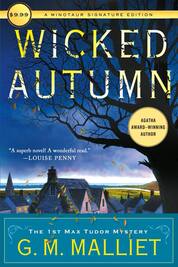
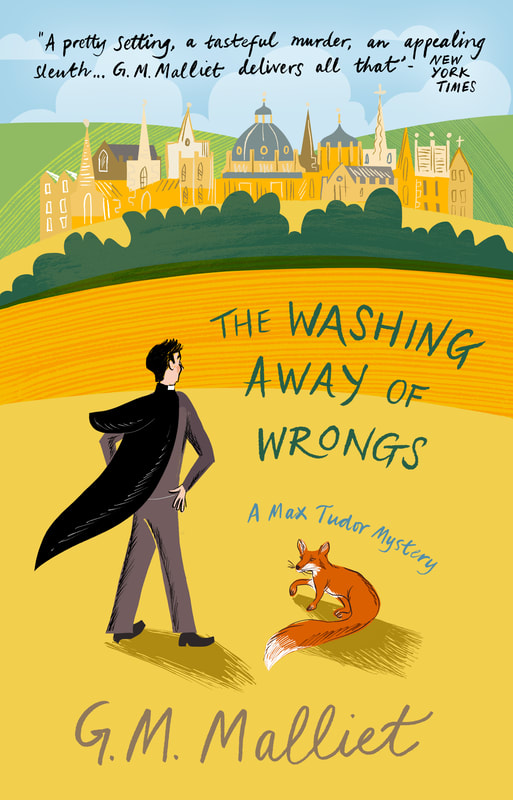
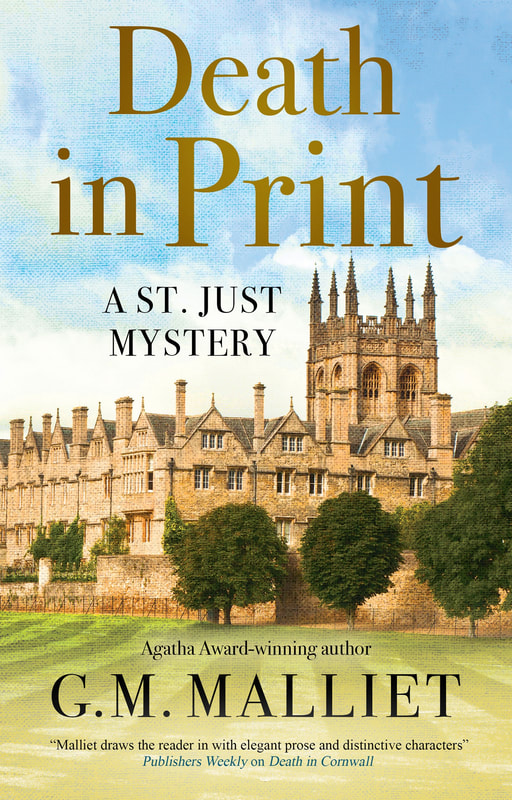
.Agatha Award-winning author of the DCI St. Just mysteries, Max Tudor mysteries, standalone suspense novel WEYCOMBE, Augusta Hawke mysteries, and dozens of short stories. Books offered in all formats, including large print, e-Book, and audio. Archives
September 2025
|